






The FIFA World Cup has always been more than just football. It is culture, politics, business, identity and spectacle wrapped into one giant global event. But the 2026 tournament in the USA, Canada and Mexico could become something even bigger: the moment football changes forever.
For the first time in history, the World Cup will feature 48 teams instead of 32. It will also be spread across three nations and an entire continent, with matches played from Vancouver to Mexico City and New York to Los Angeles. FIFA believes this new format will create the biggest and most inclusive tournament ever staged. Critics believe it risks becoming over-commercialised, environmentally damaging and emotionally diluted.
The truth is probably somewhere in the middle.
One thing is certain though - this World Cup will look, feel and sound different from anything we have seen before.
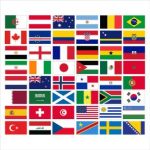
And for fans preparing to celebrate, decorate homes, pubs, clubs, schools and fan zones, demand for National Flags, World Cup Flag Packs and World Cup Bunting is already expected to surge as football fever spreads across North America and beyond.
A Truly Global Tournament
FIFA’s expansion to 48 teams means more countries will experience the World Cup dream. Nations that previously struggled to qualify now have a realistic opportunity to reach football’s biggest stage.
That matters. For smaller football nations across Africa, Asia, the Caribbean and the Middle East, qualification can transform entire generations of players and fans. More places mean more stories, more rivalries and more opportunities for football to grow globally.
Imagine the scenes if countries making their World Cup debut suddenly find themselves competing in packed stadiums across the United States or Mexico. Fans waving National Flags from nations rarely seen at the tournament could create some of the most memorable moments of the competition.
This is exactly why World Cup decorations and supporter merchandise have become such a huge part of tournament culture. Streets lined with World Cup Bunting and homes decorated with World Cup Flag Packs are now as much a part of football tradition as the matches themselves.
Football Is Becoming Bigger Than Ever
Commercially, the 2026 World Cup could become the richest football event in history.
More teams means more matches.
More matches means more broadcasting revenue.
More revenue means more sponsorships, advertising and global exposure.
For FIFA, this is a financial masterstroke. For fans, it could mean unprecedented access to the sport. More nations involved means more worldwide engagement. In the USA especially, FIFA hopes the tournament finally pushes football into genuine mainstream sporting territory alongside the NFL, NBA and MLB.
The atmosphere could be incredible. Picture massive public screenings in New York, Toronto and Mexico City. Imagine supporters decorating bars, gardens and fan parks with giant National Flags while streets are covered in colourful World Cup Bunting representing dozens of countries from around the world.
Retailers already stock extensive international flag collections and World Cup Flag Packs that make these celebrations possible. During major tournaments, demand for football-themed decorations traditionally explodes as fans transform ordinary spaces into mini fan zones.
But Bigger Does Not Always Mean Better
The concerns surrounding the tournament are serious. The biggest criticism is environmental.
Because the tournament spans an entire continent, teams and fans could face enormous travel distances between matches. Critics argue this could make the 2026 competition the most carbon-intensive World Cup ever staged.
An England supporter following their team throughout the tournament proudly waving his St George’s flag could generate several tonnes of CO2 through air travel alone.
That raises uncomfortable questions for modern sport: Can football continue expanding while claiming to take sustainability seriously?
FIFA insists it has sustainability strategies in place, including the use of existing stadiums and environmental planning initiatives across host cities.
But many experts believe the sheer scale of the event undermines those efforts.
The Risk Of Losing What Made The World Cup Special
There is also an emotional concern. Older World Cups often felt deeply connected to one host nation. Fans experienced a country’s culture, traditions and atmosphere throughout the tournament.
In 2026, the experience may feel more fragmented. A supporter could watch one match in Mexico City, another in Dallas and the next in Toronto. That creates logistical challenges, massive travel costs and a very different tournament atmosphere.
Some football fans have argued that spreading the event across multiple countries risks weakening the unique “World Cup feeling” that previous tournaments created.
Others worry the expanded format could dilute the quality of the competition itself.
More teams inevitably means more mismatches in the group stages. Traditionalists argue that qualification should remain difficult because scarcity creates prestige.
But supporters of expansion counter that football belongs to the world - not just elite nations.
Heat, Travel And Player Fatigue Could Become Major Storylines
There are also growing concerns about player welfare. The tournament takes place during the North American summer, and some host cities could experience dangerous heat conditions. Recent studies suggest a significant number of matches may occur in temperatures that raise health concerns for players and supporters alike.
Combine that with long-haul travel across three countries and an expanded schedule of 104 matches, and squad depth may become more important than ever before.
Some fans already believe endurance and logistics could influence results almost as much as footballing quality.
This could fundamentally change how international football tournaments are played in the future.
The Fan Experience Could Still Be Unforgettable
Despite the criticism, there is enormous excitement surrounding the tournament.
North America knows how to stage giant sporting events. The stadiums will be huge. The production levels will be extraordinary. The entertainment factor will likely be unmatched.
And culturally, this could become one of the most visually spectacular World Cups ever.
With 48 nations involved, expect an explosion of colour everywhere - from giant National Flags hanging from balconies to pubs decorated with World Cup Bunting and fan parks filled with World Cup Flag Packs representing countries from every corner of the globe.
Football tournaments have always brought people together through symbols and celebration. Flags become part of the emotional experience. They create identity, rivalry and atmosphere.
That is why The Flag Shop plays such a big role during major tournaments, helping supporters showcase their national pride at homes, schools, businesses, pubs and community events.
So… Will This World Cup Change Football Forever?
Probably yes.
The 2026 World Cup feels like the beginning of a new era:
- Bigger tournaments
- More countries
- More commercialisation
- More global audiences
- More spectacle
- More debate
Whether that is ultimately good or bad depends on what you believe football should be.
If football is about growth, inclusion and global reach, this tournament could be revolutionary. If football is about intimacy, tradition and preserving the magic of the classic World Cup format, some fans may feel something important is being lost.
Either way, the world will be watching!
And wherever people gather to support their teams - whether in packed stadiums, local pubs or back gardens covered in World Cup Bunting and National Flags - football will once again prove why it remains the world’s game, and we at The Flag Shop just love it!